Key Points:
- The causes are usually ordinary, not sinister: stress, kids, routine, avoided conflicts, and mismatched
love languages slowly replace connection with logistics.
- If one of you is leaning toward leaving and the other wants to save the marriage,
discernment counseling is a short-term process built for exactly that crossroads.
- Some situations are not roommate syndrome but endings: persistent unhappiness after real effort, one-sided investment, abuse, or truly irreconcilable differences. A
coach can help you figure out which one you're living in.
Have you ever wondered whether your husband or wife has become more of a roommate than a partner? You split the bills, coordinate the kids' schedules, and stand side by side at the sink, but the last real conversation, the last real kiss, is hard to remember. If your marriage seems to have gone quiet and all that remains is cohabitation without connection, you are not alone. Couples counselors hear this description so often it has a name: roommate syndrome.
This guide covers what roommate syndrome is, the signs that you've slipped into it, why it happens, how to bring the spark back, and how to know when the problem is something more final. Grab a cup of coffee and let's get into it.
What Does Roommate Syndrome Mean for a Relationship?
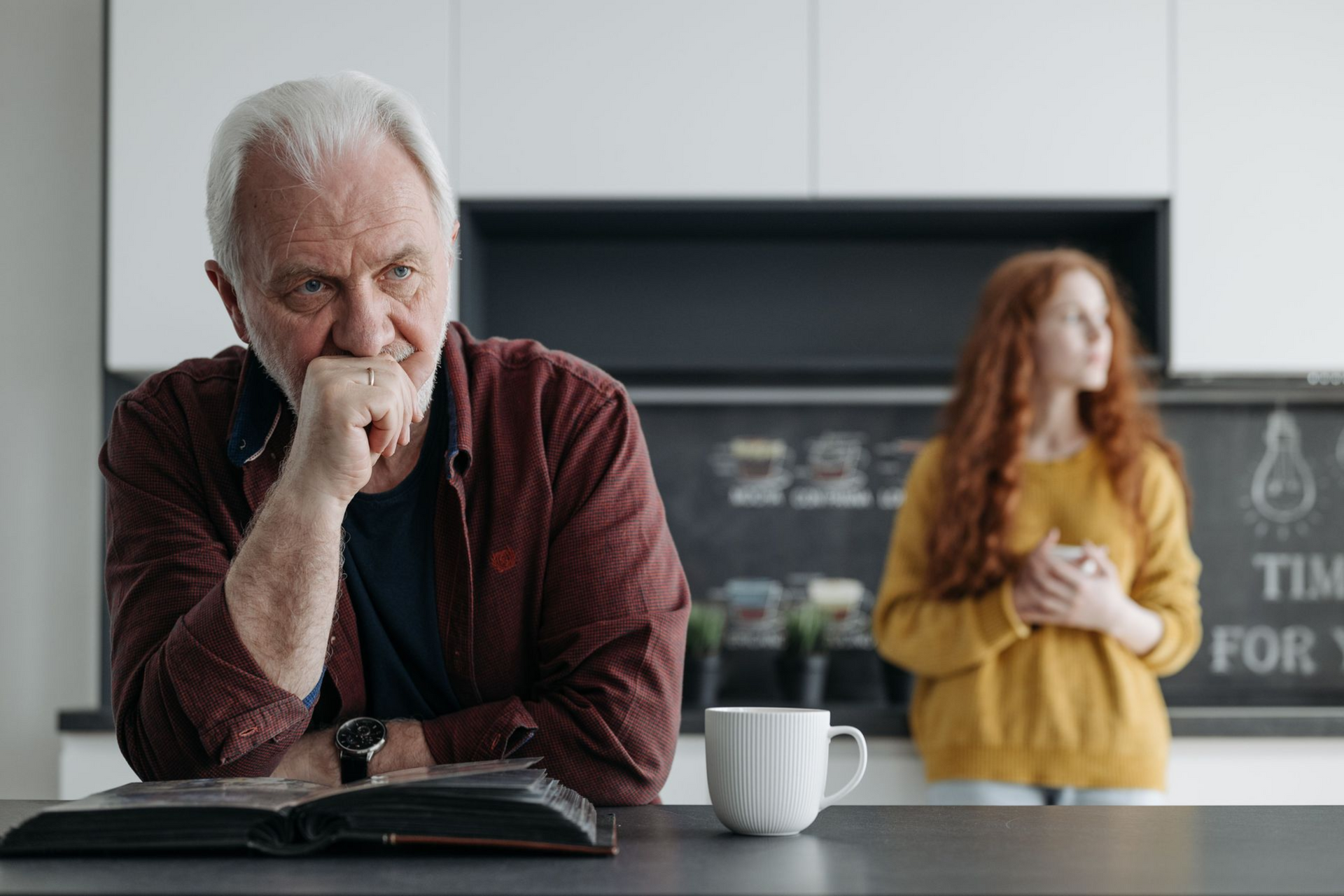
Roommate syndrome happens when couples grow apart emotionally and physically until the relationship becomes little more than a living arrangement. The household still functions, often smoothly, which is part of what makes the condition so easy to miss. You're not fighting. You're not miserable. You're just... managing a shared enterprise with someone you used to be in love with.
It can develop for many reasons: busy schedules, chronic stress, young children, or simply years of small drifts that never got corrected. The connection that once brought you together fades so gradually that many people can't name when it left, only that they now feel alone inside their own marriage.
Is There Really a Roommate Phase in Marriage?
Yes, and it's worth normalizing: most long marriages pass through at least one roommate phase. The usual culprits are life's heaviest seasons, raising young children, career crunches, caring for aging parents, when the relationship quietly drops to the bottom of the priority list because everything else is on fire. The phase itself is not a verdict on the marriage.
What matters is what happens next. A phase becomes a syndrome when it goes unnamed and unaddressed, and the temporary triage becomes the permanent arrangement. The couples who come through it are the ones who notice it and deliberately steer back toward each other.
Can You Get Past the Roommate Stage?
Absolutely, with one honest condition: both partners have to want to. Moving from roommates back to lovers is not a single conversation or one good vacation; it's a rebuilding project that takes time, patience, and sustained effort from both sides. The encouraging news is that the effort works far more often than people expect, and the research later in this article backs that up.
7 Signs You're More Like Roommates Than Spouses
Poor communication. You rarely have real conversations anymore. Nearly everything you discuss is logistics: bills, chores, the kids' schedules. You know the household's status in detail and your spouse's inner life not at all.
Little intimacy. Physical intimacy has nearly disappeared, and so has everyday affection. Hugging, kissing, and holding hands have become rare events rather than the background texture of your life together.
Separate lives. You spend more time apart than together, each absorbed in your own hobbies, activities, and social circles, and neither of you particularly misses the other during it.
Conflict avoidance. Instead of addressing issues, you skate around them. It feels like keeping the peace, but the unresolved tensions accumulate, and with them, distance.
Routine over romance. The relationship runs on autopilot. Date nights, spontaneous gestures, and any deliberate effort to court each other have quietly stopped.
Feeling unappreciated. One or both of you feels taken for granted. Acts of kindness go unnoticed, thanks goes unsaid, and contribution has replaced affection as the currency of the marriage.
Emotional distance. When something is wrong, you no longer turn to each other for comfort. You've stopped opening up, and your spouse has stopped asking.
If several of these describe your marriage, you're likely in roommate territory. The next question is why, because the cause shapes the fix.
Why Does My Spouse Treat Me Like a Roommate?
Feeling that your husband or wife treats you like a roommate rather than a partner is disheartening and confusing. It's worth saying plainly: this dynamic is almost never one person's doing, and it happens to wives and husbands alike. Here are the most common causes.
Stress. Work pressure, money worries, and family responsibilities drain the energy that connection requires. A chronically stressed spouse often withdraws not from lack of love but from sheer depletion, though the effect on you is the same.
Lack of communication.
Good communication is essential in any relationship, and when it breaks down, misunderstandings pile up and
curdle into resentment. Without honest conversations, both spouses end up feeling detached, each assuming the other stopped caring first.
Routine and monotony. Every long relationship risks the rut. When date nights, affectionate gestures, and genuine moments together fall away, ordinary life flattens into a schedule, and schedules feel like something you share with a roommate.
Emotional baggage. Unresolved wounds, from past relationships or from earlier chapters of this one, can shape how a person shows up today. A spouse still carrying old hurt may guard themselves in ways that read as coldness.
Different love languages. Everyone has preferred ways of
giving and receiving love, and mismatches quietly starve both partners. If
one of you speaks in words of affirmation and the other in acts of service, each may be genuinely expressing love the other never registers. Learning to recognize love in the form it's actually given, and to offer it in the form your partner receives, closes a gap that neither malice nor indifference created.
Personal struggles. Sometimes the distance comes from what a spouse is carrying alone:
depression, anxiety, or other mental health challenges can leave a person with no emotional energy to invest in the relationship. If you suspect this, the conversation to have is a caring one about their wellbeing, not an accusation about the marriage, and professional support can help you both.
Growing apart. People change over time; that's normal. But when goals, values, and visions of the future diverge and nobody names it, couples can drift into wanting different lives while still sharing one address. The divide grows subtly until it feels like a canyon.
Conflict avoidance. Constantly dodging confrontation feels like protecting the peace, but it works in reverse. Refusing to discuss problems doesn't dissolve them; it stores them, with interest, and the accumulated unspoken grievances become the wall between you.
How to Fix Roommate Syndrome
Once you recognize the pattern, the path back runs through deliberate effort on both sides. Here is where to start:
- Have the conversation. Begin with an open-hearted talk with your spouse about how you've been feeling. Use "I" statements that describe your experience without blame: "I miss us" lands very differently than "you never touch me anymore." How you open matters enormously; research on couples finds that
conversations tend to end the way they begin, so a gentle start is not just politeness, it's strategy.
- Seek to understand each other. Ask whether your spouse has felt the same distance, and genuinely listen to the answer. Very often both partners have been lonely in parallel, each assuming the other was content with the arrangement. Discovering you've both been missing the marriage is frequently the turning point.
- Rekindle the romance deliberately. Plan dates, revive the small gestures, and say the appreciative things out loud. It will feel a little artificial at first, and that's fine. Connection follows behavior more often than it precedes it, and the couples who wait until it feels natural again tend to wait forever.
- Learn each other's love languages. Discover how your partner actually receives love and practice expressing it in that form, not just your native one. It's one of the fastest ways to make effort land after years of it missing.
- Protect time together. Amid the daily hustle, quality time is always the first thing sacrificed, so it has to be deliberately scheduled and defended: regular time together, without screens, without logistics talk. Boring on paper, transformative in practice.
- Get outside help sooner rather than later. A
marriage coach or couples therapist can surface the patterns you two can no longer see from inside them. And the evidence here should genuinely encourage you: research on emotionally focused therapy, one of the best-studied approaches, finds that
roughly 70 percent of distressed couples recover, with improvements holding at two-year follow-up. Roommate syndrome, caught and worked on, is one of the more fixable problems a marriage can have.
One more option worth knowing about: if you've drifted so far that one of you is quietly leaning toward divorce while the other wants to rebuild, ordinary couples therapy often stalls, because you're no longer trying to solve the same problem.
Discernment counseling is a short-term process, typically one to five sessions, designed for exactly this mixed-agenda situation. Its goal is not to save the marriage but to help you both reach a clear, confident decision: stay the course, move toward divorce, or commit to a real six-month effort at repair.
When Should a Couple Call It Quits?
There are usually signs when a marriage is truly ending, and honesty requires naming the situations where the answer isn't another date night:
- Persistent unhappiness after real effort. You've had the conversations, made the changes, done the counseling, and you are still deeply unhappy. Effort matters, but so do results, and years of documented trying is an answer of its own.
- One-sided investment. Reviving a marriage takes two. If your spouse refuses to engage, dismisses your feelings, or lets you carry the entire repair effort alone, you eventually learn what their answer is, even if they never say it out loud.
- Abuse. Any form of abuse, physical,
emotional,
financial, or psychological, changes the question entirely. That is not roommate syndrome, and the priority becomes your safety, not the relationship's revival. The
National Domestic Violence Hotline at 1-800-799-7233 is available 24/7 if you need confidential help thinking through your situation.
- Truly irreconcilable differences. Some divides, whether to have children, fundamentally incompatible values or futures, cannot be compromised down the middle. Two good people with incompatible lives don't have a romance problem, and no amount of rekindling resolves it.
The Bottom Line
Every long relationship passes through seasons of distance, and feeling like roommates does not mean your marriage is over. It means your marriage is unattended, and there is a real difference. Name the pattern, have the honest conversation, put deliberate effort into reconnecting, and get professional support early rather than late; the research says those efforts succeed far more often than despair predicts.
And if the honest inventory points the other way, toward a marriage that one or both of you has already left in every way but legally, there is support for that road too. DivorcePlus offers
free expert resources and access to
coaches who help people at every point on this spectrum, from rebuilding a marriage to navigating its end. Whichever direction you're facing, you don't have to figure it out alone.
Frequently Asked Questions
What is roommate syndrome in marriage? Roommate syndrome is the state where a married couple has drifted into functional cohabitation: the household runs, the logistics get handled, but emotional and physical intimacy have faded to nearly nothing. Conversations are transactional, affection is rare, and both partners quietly feel alone. It's common, it develops gradually, and it's reversible when both partners recognize it and engage.
Is it normal for married couples to feel like roommates? Phases of it, yes. Most long marriages pass through roommate stretches during heavy seasons: young children, career crunches, health crises, caregiving. The phase itself isn't a verdict. It becomes a problem when it goes unnamed and hardens into the permanent shape of the marriage, which is why noticing it and acting on it matters more than the fact that it happened.
Can a roommate marriage be saved? Very often, yes, provided both partners are willing to work on it. Deliberate reconnection (honest conversation, scheduled quality time, learning each other's love languages) resolves many cases, and professional help improves the odds substantially: studies of emotionally focused couples therapy show roughly 70 percent of distressed couples recover, with gains lasting years. The cases that don't recover usually involve one partner who has already checked out or deeper incompatibilities.
How do I talk to my spouse about feeling like roommates? Gently, and about yourself rather than about their failures. Open with "I" statements: "I've been missing us lately, and I'd love for us to feel close again," rather than a list of what they've stopped doing. Research on couples shows conversations end the way they begin, so a soft, blame-free start gives the talk its best chance. Pick a calm moment, not mid-conflict, and ask how they've been feeling too; you may find they've been lonely in parallel.
When is feeling like roommates a sign the marriage is over? When the distance persists after genuine, sustained effort from both of you; when only one of you is doing the work and the other refuses to engage; when the honest answer is that your values and futures no longer point the same direction; or when any form of abuse is present, which changes the question from repair to safety. If you're unsure which situation you're in, discernment counseling exists precisely to help couples reach a clear, confident answer.
Related reading:
12 Signs of a Marriage Ending |
No Intimacy in Marriage: What to Do Next