
Starting Over, Life After Divorce
By Monique Drake, JD and Certified Coach • May 16, 2026

Key Points:
- Slow down on the big, optional decisions. Divorce ranks as the second most demanding life event on the Holmes and Rahe stress scale, and stacking a career change or a cross-country move on top of it multiplies a load that is already near the top of the chart.
- The odds are better than they feel. A review published in Divorce and Health: Current Trends and Future Directions found roughly 72 percent of divorcing adults showed a resilient outcome, with little lasting drop in life satisfaction.
- Money deserves early, unsentimental attention. Household income commonly falls 23 to 40 percent for women in the year after divorce, and a University of Michigan study found that roughly 115,000 American women lose private health insurance each year in the months following a divorce.
- What harms children most is not the divorce itself. In their landmark review, Kelly and Emery found that most children prove resilient, and that ongoing conflict between parents is one of the strongest predictors of poor outcomes. Protecting your kids largely means protecting them from the fight.
- Feeling like you do not know who you are anymore is a documented effect, not a defect. Research on self-concept clarity after a breakup shows that untangling two lives leaves people genuinely unsure of their own identity, and rebuilding that clarity is what reduces the distress.
Endings are hard, and no two divorces look alike. Whether you filed, your spouse filed, or the two of you arrived at the decision together, the months after a divorce ask you to rebuild a life while you are still exhausted from dismantling one. I have spent my career inside the legal system, first clerking for a District Court Judge and a Louisiana Supreme Court Justice, and now working as a mediator and divorce coach. I have watched a lot of people cross this bridge. The ones who cross it well are rarely the ones with the most money or the friendliest ex. They are the ones who sequence things correctly, ask for help early, and give themselves permission to take the whole thing slowly.
Here is how I would walk it with you.
The One Year Rule
The end of a marriage triggers a wave of change all at once. Some of it is unavoidable: where you live, how the children's week is structured, how the bills get paid. But there is a second category of change, the optional kind, and this is where people get into trouble. The urge to blow up your life is strong right now. Quit the job. Sell everything. Move across the country. Cut off your hair and your history in the same week.
My advice, and a common rule of thumb among people who work in transitions, is to hold off on any major, unnecessary, life-altering decision for about a year after the decision to divorce. The reason is not superstition. It is load management. When divorce already sits at number two on the Social Readjustment Rating Scale, with marital separation at number three, and when a move, a financial shift, and a changed social circle typically come along for the ride, you are carrying an enormous amount of adjustment at once. Adding a discretionary upheaval to that pile is how people end up in a job or a city or a relationship they did not really choose.
Stability is the goal wherever stability is safe and possible. Keep what can be kept. Let the familiar parts of your life do the boring, unglamorous work of holding you steady while the rest sorts itself out. If your situation genuinely requires a bigger change, make it deliberately and with a team around you, which brings us to the next step.
Build Your Team
It really does take a village. The people you lean on during and after a divorce are not a luxury, and the research bears this out. A meta-analysis of studies on post-divorce adjustment and social relationships found that social relationships in the post-divorce period are consistently associated with better adjustment, with group and network connections especially tied to positive adjustment and close individual relationships buffering against the worst outcomes. Put plainly, connection is protective, and isolation is expensive.
Here is the team I encourage clients to assemble.
Your personal board of directors. A company has a board, and so should you. This is nothing formal, just a handful of people whose judgment you trust and whose loyalty is clear. Choose carefully, with an honest eye toward each person's relationship with your ex. You want people who will tell you the truth, not people who will simply agree with you or, worse, carry your words back across the aisle.
A therapist or divorce coach. A trained professional gives you something friends cannot: an objective ear, a set of tools, and no stake in the outcome besides yours. It is normal to try more than one before you find the right fit, and that is not a failure. The American Bar Association recognizes divorce coaching as a flexible, goal-oriented process built to help you make good decisions based on your own interests and needs. In my practice, this is where clients sort out what they actually want, rehearse hard conversations, and stop making decisions out of pure adrenaline.
A family therapist, if you have children. Your kids are processing this too, in a language that may not sound like words. A good family therapist gives them tools and a safe place to use them.
A financial professional. Divorce redraws your entire financial picture, and the redrawing needs an expert eye. Look for a licensed financial advisor, ideally one experienced with divorce, who can help you build a real plan out of what you have.
Your Mental Health
Somewhere in the middle of all this, you will find yourself replaying the marriage. It is almost universal. And for many people the replay lands on one brutal word: failure. I want to push back on that word, because the evidence does not support it and it will not serve you.
Look at what the research says about how this actually ends. A large body of work summarized in Divorce and Health: Current Trends and Future Directions found that most people cope well and prove resilient after a marriage ends, with one large prospective study of German adults showing close to 72 percent maintaining their life satisfaction across the years surrounding the divorce. A smaller group, roughly 10 to 15 percent, struggles substantially, and that group needs and deserves real help. But the common outcome is recovery, not ruin.
Therapy helps, whether you are new to it or have been in it for years. Some people prefer one-on-one work. Others find that support groups do something individual therapy cannot, which is to put you in a room with people who do not need the situation explained to them. Try more than one thing. And if your mood is not lifting, if it is interfering with sleep, work, or your ability to function, or if you ever find yourself thinking you would be better off gone, treat that as the priority it is and reach out to a licensed professional right away.
Your Children
If you share children with your ex, their lives are being rearranged too, and your stress will find its way to them whether you intend it or not. Here is the single most useful thing I can tell you, and it comes straight from the research.
In their landmark review of the literature, Joan Kelly and Robert Emery found that the majority of children whose parents divorce are resilient and adjust well over time, and that the strongest risk factors for poor outcomes are not the divorce itself but what surrounds it: ongoing conflict between parents, a damaged relationship with a parent, and financial instability. The American Academy of Child and Adolescent Psychiatry points the same direction, emphasizing routine, reassurance, and steadiness as what carries kids through.
Read that carefully, because it hands you enormous power. You cannot undo the divorce for your children. You can very largely control the things that determine how they come out of it.
Keep them out of it. No disparaging remarks about their other parent, not in the car, not on the phone, not "just this once" when you are angry. That person is still their parent, and children hear criticism of a parent as criticism of half of themselves. Any negative feelings you have about your ex are yours to process with your board or your therapist, not with your kids.
Protect their relationship with both of you. Loyalty binds are corrosive. Do not make your child choose, report, or carry messages.
Co-parent like colleagues. If you share custody, you are now running a joint venture whose only product is these children. Find common ground on the big things: bedtimes, screens, discipline, school. Handle disagreements away from little ears. Predictability across two homes is a gift you can give them even on the days you cannot stand each other.
Get them their own support. A licensed therapist gives them a place to have their feelings without managing yours. Be patient while they find the right fit.
Reframing the Marriage
Once the dust settles, come back to the question of how you tell the story of your marriage, because you will be telling it, to yourself, for the rest of your life.
The reflex is to file the whole thing under "failure." But a chapter ending does not mean the chapter was worthless. You may share children who exist because of that marriage. You may have had genuinely good years, or learned things about yourself, or discovered exactly what you need from a partnership and what you will never accept again. Value and ending are not opposites.
You do not have to do this reframing on day one, and forcing it early tends to ring false anyway. Give yourself the room to grieve first. But at some point, deliberately, go back and pull the true positives out of that relationship. The story you settle on becomes the ground you build the next chapter on, so it is worth building it honestly rather than bitterly.
Learning to Be Single Again
We hold rituals to mark the beginning of a marriage and almost nothing to mark its end, which leaves people to figure out the ending alone. That is a shame, because this stretch matters enormously.
If you feel unmoored, like you cannot quite locate yourself, there is a name for that. In a set of studies published in the Personality and Social Psychology Bulletin, Slotter, Gardner, and Finkel found that romantic relationships overlap our very self-concepts, and that when a relationship ends, people experience a measurable drop in self understanding and confusion about who they are. Notably, that confusion independently predicted emotional distress, above and beyond the pain of the breakup itself. In other words, part of what hurts right now is not sadness about your ex. It is not knowing who you are without them.
The cure is exactly what it sounds like: go find out. Take yourself on dates. Eat at the restaurant they would never have chosen. Go to the museum alone on a Saturday. Pick up the hobby you shelved in year three of the marriage. Learn what you like when there is no one to compromise with. This is not filler, and it is not sad. It is the direct rebuilding of the thing whose absence is causing the distress, and it is how self-esteem and confidence come back, one small preference at a time.
Friendships
Who gets the friends? This part just sucks, and yes, some friendships will not survive. Research on how friendships shift after a split generally finds that individual friendships, the ones that were truly yours, have the staying power, while couple friendships, the ones that happened between the two of you and the two of them, are the ones most likely to fade.
A few ground rules. Don't force shared friends to pick a side; the ones who choose you freely are worth more than the ones you cornered. Do not vent about your ex to shared friends, however tempting, because you are putting them in an impossible position and souring a friendship you may want later. And do not disappear. Say yes to the invitation you would rather decline. Given what the research says about connection and adjustment, a shrinking social circle is not just lonely, it is a health risk. Julianne Holt-Lunstad's meta-analysis in PLOS Medicine, pooling 148 studies and more than 300,000 people, found that strong social relationships were associated with a 50 percent greater likelihood of survival.
Rebuilding a circle in midlife is slow, awkward work. Do it anyway. Join the thing. Take the class. Show up twice.
Your Relationship With Your Ex
After the decree is signed, you have to decide what contact looks like. There is no universal answer, and anyone who gives you one is not paying attention. Weigh your safety first, then your children, then your own emotional bandwidth, then the terms of your divorce.
Some people manage a genuinely cordial relationship with an ex. Many do not, and that is not a failure of character. Remember, too, that this runs both ways: your ex may want more contact than you do, or far less, and their preferences shape what is actually available to you regardless of what you had in mind.
Be practical about the small things. Before you attend an event where your ex is likely to appear, run the scene in your head honestly. If seeing them across a room with mutual friends would undo you, it is fine to skip that one. Protecting your peace in advance beats apologizing for a scene afterward. Over time, most of this softens. Early on, give yourself the easier road.
If contact with your ex is unsafe, that is a different conversation entirely, and it belongs with an attorney, not a coach.
Your Financial Health
Now the part no one wants to talk about, money.
Divorce restructures your finances Research on the economic consequences of divorce finds that household income commonly falls by roughly 23 to 40 percent for women in the year following a divorce, and both parties typically absorb the basic math problem of funding two households on what used to fund one. Health coverage is a frequently missed casualty: a University of Michigan study published in the Journal of Health and Social Behavior estimated that about 115,000 American women lose private health insurance each year in the months after divorce, with roughly 65,000 of them becoming uninsured, and coverage rates staying depressed for more than two years.
Take these on as soon as you can:
- Build a real post-divorce budget based on your actual income, not the household's old one.
- Solve health insurance deliberately rather than discovering the gap later, whether through an employer plan, a marketplace plan, or continuation coverage.
- Look hard at retirement. Retirement accounts are frequently the largest asset in a marriage, and dividing them correctly is technical work. Get it right on paper.
- Update the documents nobody thinks about: beneficiaries on retirement accounts and life insurance, your will, and any powers of attorney. An out-of-date beneficiary designation can quietly undo everything your settlement accomplished.
- Rebuild credit and banking in your own name.
Then bring in a licensed financial professional to turn that list into a plan. Facing this head-on early is uncomfortable for about a week. Avoiding it is uncomfortable for years.
Romantic Relationships, When You Are Ready
Dating may look nothing like it did the last time you did it. But then, neither do you. What fit you at twenty-eight may have nothing to do with what would fulfill you now, and that is one of the quiet gifts here.
Two things are true at once. It is completely okay to stay single, and it is completely okay to get back out there. What I would ask is that you not use a new relationship to skip the work in the earlier sections of this article. The research on self-concept clarity suggests why: if you have not yet answered "who am I on my own," you will be handing that question to someone new to answer for you, and that rarely ends well. Rebuild the self first, at least enough to know what you are looking for and why.
There is no schedule here and no prize for speed. Take the time to figure out what a good relationship even means to you now. You may find that you are happy on your own. You may find that you want partnership again, on very different terms. Both are wins, because both are chosen.
The Long View
Starting over is not one decision. It is a long series of small, unglamorous ones: the budget you finally build, the friend you call back, the therapist you keep seeing, the remark about your ex you decide not to make in front of your kids. Those are the bricks. Stacked over a year or two, they become a life that fits you better than the one that ended.
Divorce asks you to make some of the biggest decisions of your life at one of the hardest moments of it. You do not have to make them alone, and you do not have to make them all this week. Take the year. Build the team. Then reimagine what you want, for yourself and for your children, and go build it.
This article is for general informational purposes only and is not legal or financial advice. Laws vary by state. Consult a licensed attorney and a licensed financial professional in your jurisdiction about your specific situation.
Frequently Asked Questions
What is the one year rule after divorce? It is a common guideline in transitions: avoid major, optional, life-altering decisions for about a year after deciding to divorce. Unavoidable changes like housing and custody obviously have to be handled, but discretionary upheavals like quitting a job or moving across the country are best postponed. Divorce is already ranked the second most demanding life event a person can face, and piling on more adjustment tends to produce decisions people later regret.
How long does it take to feel normal again after a divorce? Adjustment research generally describes an acute phase over the first several months, gradual stabilization across the following one to two years, and most people returning to their baseline within a few years. The majority prove resilient. If your distress is severe or is not easing at all with time, that is a signal to bring in a therapist or coach rather than to wait it out.
How do I protect my children during a divorce? Protect them from the conflict. The research consistently finds that most children adjust well and that ongoing parental conflict is one of the strongest predictors of poor outcomes. Keep disagreements away from them, never disparage their other parent, do not use them as messengers, keep routines predictable across both homes, and give them their own therapist if they need one.
What financial steps should I take right after a divorce? Build a budget on your actual income, solve health insurance deliberately rather than letting a gap appear, confirm retirement accounts are properly divided, and update beneficiaries on retirement and life insurance policies along with your will and powers of attorney. Then work with a licensed financial professional to build a longer-term plan. An outdated beneficiary designation is one of the most common and costly oversights after divorce.
When should I start dating again after divorce? There is no set timeline, and both staying single and dating again are legitimate choices. What matters more than the calendar is whether you have rebuilt enough of your own identity to know what you want. Research shows that people experience real confusion about who they are after a relationship ends, and that confusion independently drives distress. Answer that question for yourself first, and you will date from a much stronger position.
Related reading: Building a Positive Mindset After Divorce | Rebuild Your Confidence After Divorce | How to Make Your New Place Feel Like Home After Divorce | Find Your Coach
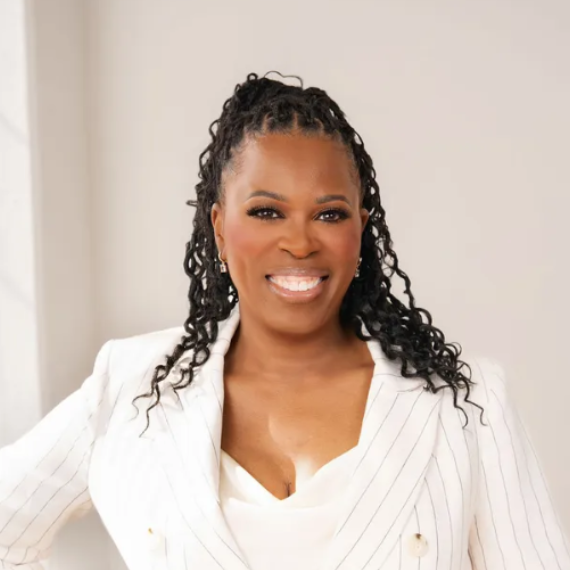
Monique Drake, JD, is a Louisiana-licensed attorney, qualified mediator, and Certified Strategic Intervention Life Coach, helping clients through divorce and life transitions with strategy and confidence.
Talk to a coach today
Subscribe for free updates, tips and more
By clicking “subscribe", I agree to DivorcePlus’s Terms of Use and Privacy Policy. I also agree to receive emails from DivorcePlus and understand that I may opt out at any time.
Contact Us
We will get back to you as soon as possible.
Please try again later.
This article is general information and is not a substitute for individual therapy, medical care, or legal advice. If you are in an abusive relationship, contact the National Domestic Violence Hotline at 1-800-799-7233. If you are in crisis, call or text 988. If this is a life threatening emergency, call or text 911.
Latest Posts





Postpartum Depression and Divorce: What It Does to a Marriage, and What It Doesn't Cost You in Court